In the last of this series, we will consider arena. Many writers believe erroneously that arena is solely the remit of the Director or Director of Photography, but this belief relies solely on the idea that arena is *only* about "what we see as image" or the location.
Arena is not just about image or the location of your story, but its whole world - "the feel of the piece". In creating your Thriller's "story world" like this, you may consider storytelling devices like non-linearity, voiceover or montage; mise-en-scene, allusion or motif. There are no "right or wrong" ways to approach arena per se; instead arena relies on consistency and context.
Consider the nightmarescape that is the arena of Se7en for approximately 80% of the movie. It frequently rains, thunder overhead; neon signs from strip clubs and food franchises mirror in the puddles on the ground. But it goes *beyond* grotty and horrible: this place is HELL, "abandon all hope ye who enter here." Mills has moved to the city to pursue a promising police career: he knows in this horrible place, there are the "ultimate" bad guys and he can rise through the ranks quickly. His Wife is not so lucky; she *was* a school teacher, but has no job now - perhaps intimating children have no place in this vile City. The City is a horrifying place, a conurbation so dark and twisted Mill's Wife, newly pregnant herself, cannot even imagine raising a child there to the point she tells Somerset first, asking for advice on whether she should seek an abortion.
But remember, John Doe does not choose this hellish place for the final showdown between him and Mills; instead he makes his terrible last confession to Mills' repeated demands - "What's in the box?" - in the middle of an open field, in bright sunshine - the strangest of contrasts. But then, Se7en has one of the most famous "downer" endings of Thriller movies: the audience expects Mills and Somerset to be triumphant and Doe to be vanquished. Instead, John Doe gets what he wants: death, with Mills' career ruined and his Wife dead. Somerset, having wanted to go into retirement with his head held high, instead is tormented by the proceedings that unfurled in front of him, which he was powerless to stop. In short, the good guys lose and the bad guy Doe (even though he dies), wins.
Notice from the above then, the arena takes in the story and RELATES IT to image and location. For the screenwriter, the vile, dark city gives Mills, his Wife and Somerset motivation for the way they look at the world and react to it. John Doe, a clever and manipulative man, takes advantage of Somerset and Mills, taking them somewhere seemingly innocent in the resolution - then blowing them away with his final revelation.
Using arena in this way makes the screenwriter's work better, but crucially does not do the Director or DoP's jobs for them, since they are still able to render that arena as image in the way they see fit. If story is the "job" of the writer, it makes sense to use ALL of its arsenal, rather than leaving arena out and concentrating instead on say, dialogue (as is so often the case in spec scripts).
Deviation has a very strong arena - and not just because its writer JK Amalou is also its director. Shot in our capital city, JK wanted to bring forth the "kind" of London audiences just don't see in Brit movies on average. Amber's car journey with her abductor Frankie is a "Road to Hell", bringing forth huge, dark, nightmarish vistas, crucially unlike the smaller, more "underground" dark minutiae "behind closed doors" called forth in the likes of Se7en.
So if you're writing a Thriller, best of luck!

Showing posts with label Amber. Show all posts
Showing posts with label Amber. Show all posts
Monday, 9 May 2011

Tuesday, 26 April 2011
Writing the Thriller # 5: Keeping Going (Structure, Part 2)
 |
| Jason Robinson, sound recordist for DEVIATION |
We've mentioned before several times that Thrillers too often become dramas "with a bit of killing/fighting in". Another big issue affecting Thriller scripts in the spec pile is the fact they "run on the spot". In other words, the story does not feel as if it PROGRESSES: events may happen, but they do little to ADVANCE THE STORY.
Think again about that all-important *classic* Thriller movie poster, with the running protagonist. If Comedy is about the "funny" and Horror is about the "spills", then Thriller is very much about THE CHASE.
Question: if you are being CHASED and your life (literally or figuratively) is actively in danger, what is the best thing to do -- stop? No, of course not:
YOU JUST KEEP GOING.
But now let's consider actual running in real life. In sprints, the running itself must be fast - and is over relatively quickly, sometimes in just seconds. We cannot compare a movie to a sprint; it would be difficult to apply the notion even to a short film (outside of the "micro short" category).
Instead, a movie is more like a marathon. Runners must "limber up" and start off usually at a fairly steady pace. In The London Marathon (and other high profile running events), there will be a "pace setter" who will run the first five-to ten miles, before dropping out. In the same way, the writer of ANY film - genre or drama - needs to "set the pace" from the offset.
In the Thriller and Horror then, the pace needs to be fairly quick from the offset and they need to get faster: these two genres are the "elite" professional runners in the Marathon, whereas there is some leeway for Comedies, Dramas and sometimes even Science Fiction to be the amateurs in fancy dress running or even walking at the back of the race.
And of course, in the marathon, the more you run, THE HARDER IT GETS - and this should be the case for movies, too. The reason many films "run on the spot" is because they do not challenge their characters ENOUGH. Instead, writers shy away from inflicting the WORST they can possibly imagine... Why? It's difficult to say. Sometimes writers fall in love with their protagonists or antagonists and don't want to "put them through" the conflict - but that's at the heart of any narrative, not just Thrillers. Other times writers confess to feeling "daunted" by Act Two, saying it feels like a huge wasteland that needs filling.
In Deviation, there are no flashbacks; we are asked to invest in Amber as the protagonist and Frankie as the antagonist through their actions in "present time" alone. Sometimes though, writers may feel they must include lots more back story to "fill up the space" and "give" their characters motivation, via multiple flashbacks, montages and other storytelling devices.
However, the Thriller is one of the most LINEAR narratives - even when it is non-linear. Consider two VERY famous non-linear Thrillers: Memento and The Bourne Supremacy:
MEMENTO: The main plot goes backwards; the sub plot - "Sammy Jankis" - goes forwards and both "tie up" in Leonard Shelby's realisation at the end.
THE BOURNE SUPREMACY: Jason Bourne is haunted throughout his main mission (ergo the main plot) by fragments of a memory of a door in a hotel. In each flashback, the memory gains more information - for him AND the viewer - until Bourne realises (again, at the end) what happened in *that* hotel room.
Note that these flashbacks are PLOT-BASED, not character-based, in the Thriller. We do not see long flashbacks of Leonard and Bourne's lives as children; their parents, siblings or friends; or what happened to them at school as we might in a drama or a comedy. Instead the audience is asked to consider PIVOTAL MOMENTS in their lives that *made* them the men they are today, via THEIR ACTIONS AT THAT MOMENT. The character learns about himself through what he DID, hence the old screenwriting mantra, "characters are not what they say, but WHAT THEY DO" - and the same goes for flashbacks in the Thriller.
So think on... Structure in the Thriller needn't be daunting. Taking the marathon analogy again, it could be broken down like this:
ACT ONE - SET UP - The pace setter (the writer) brings the characters and story in, hand in hand; the world of the story is established and the characters' motivations are made clear.
ACT TWO - CONFLICT - The pace setter "drops out", because the story and the characters are running on their own. This is when it starts to get more difficult... and more... and more... Don't EVER let up; the characters might feel like their lungs are burning, but they're not dead yet, there's *still* some effort left for --
ACT THREE - RESOLUTION. Here in the Thriller, quite possibly all is lost for the protagonist. They're staring ruin or even death in the face. But there's the finish line in the distance! They get their last bit of effort together and race for it... or crash and burn.
Concluding then, if you find *your* Thriller "running on the spot", consider the following in finding out why:
- How have I set my pace at the beginning?
- How does my pace develop throughout the narrative? (ie. does it get more difficult?)
- What does the character learn about the situation and/or himself/herself throughout the narrative?
- How does that character make that realisation at the end of the story - and what impact does it have on him/her and the other characters?
NEXT: Arena - "the feel of the piece"
Tuesday, 12 April 2011
Writing The Thriller # 3: Secondary Characters
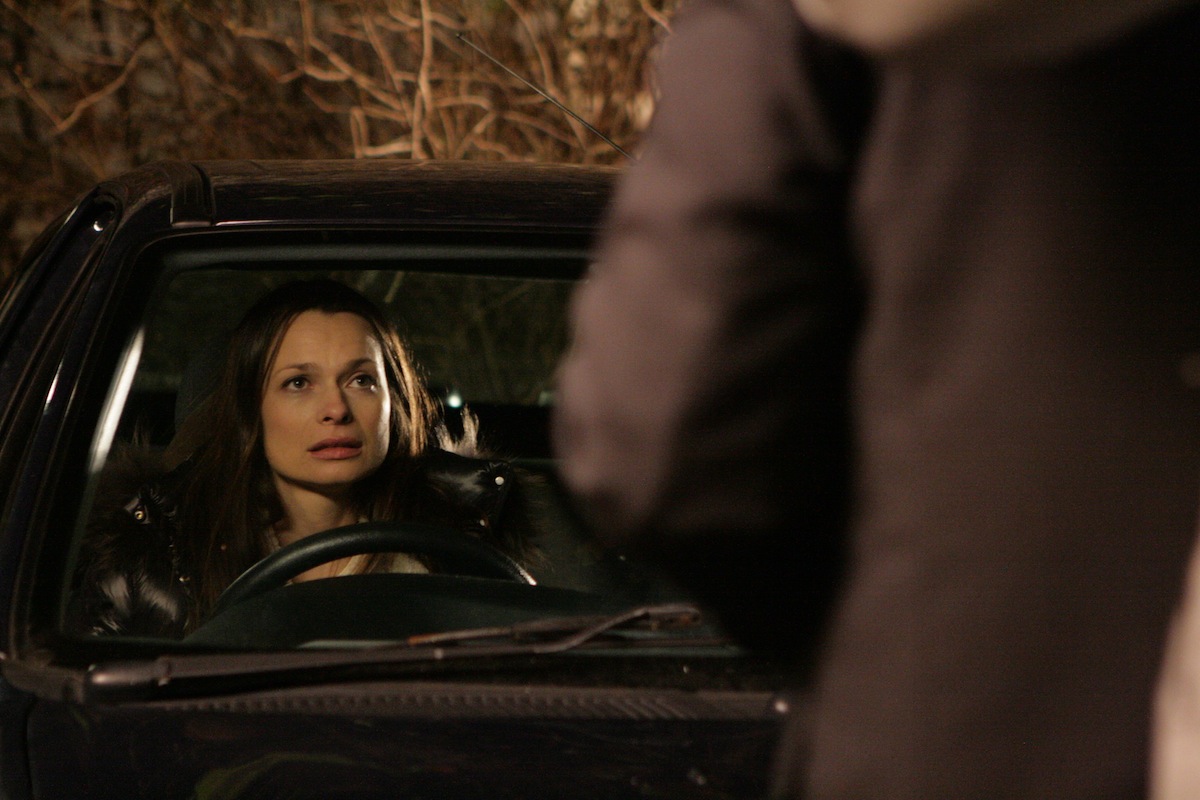
However, secondary characters are similarly important, as with all genre films. Even in Thrillers with small casts like Deviation - a film which concentrates mainly on Frankie and Amber, on their own, in the car - other characters must come into play. Each secondary character must offer something to the narrative and "pull their weight"; they are not there for the sake of it, however interesting they might be. Yet how can we, as writers, choose the "right" secondary character?

Basically, we must look to the notion of ROLE FUNCTION in picking the "right" secondary character. Every character in Deviation - and indeed all good thrillers and genre movies - must make that all-important CONTRIBUTION to the narrative in terms of pushing it forward. It is no good *just* to have a "wise cracking friend" or "mentor figure" who does not perform a specific FUNCTION in keeping the story going. In other words, good characterisation is not just about about how "cool" or "memorable" that character is, but what the character DOES in the story.

In addition to the above characters, there are also other peripheral characters such as "The Hoodies", "The Van Driver" and "The Mini-Cab Driver". These parts, somewhat smaller than those above, are usually present to demonstrate a specific element of another character (such as Frankie's ruthlessness) or a single moment in the narrative that drives home the overall theme of the story.
Concluding: when writers are told secondary characters must "pull their weight", they're essentially being told secondary must contribute that all-important ROLE FUNCTION. What this means:
*What* can this character GIVE or TAKE AWAY from the character driving the action - be it protagonist or antagonist? And what does this MEAN to the overall story?
NEXT: Structure, part one: Dramatic Context, "Flight then Fight"
Monday, 4 April 2011
Writing The Thriller # 2: Characters - Protagonist & Antagonist

Now it is time to consider the characters within Thrillers and how they differ not only to each other in terms of traits, but in terms of characters in OTHER genres.
The Thriller protagonist can be male OR female, much like in the Horror genre (and in comparison to say, the Comedy genre, which focuses very much on the male protagonist, even in the Rom-Com post Frat Pack/Judd Apatow). The first thing to consider in your Thriller’s protagonist then is not their gender, but rather their “goodness”.
In comparison to many other genres that may offer us a protagonist who is deeply flawed and even has unlikable character traits, the Thriller protagonist is frequently what can be described as a “good person” or “upstanding citizen”. This is not to say they have never made mistakes in their lives, but rather, in their hearts, they have something “good” that drives them – an uncompromising sense of right/wrong; formidable self preservation skills; or the ceaseless protection of an innocent or even society itself.

Amber in DEVIATION has this “good” quality: she is a young wife and mother, keen to get back to her family after a long shift at the hospital where she works as a nurse. It’s important to note however Amber is no whiter-than-white saint and her life is far from “rosy”: like many working Mums, she has a lot of pressure on her, not least her partner Joe’s depression which she references in the film later when antagonist Frankie quizzes her. Amber is a three–dimensional character and no victim. She does not fall back on limited Hollywood stereotypes either: she HATES the situation she finds herself in and never once starts to empathise with her abductor Frankie. She does all she can to get away, he is “The Enemy”.
It's basic screenwriting to suppose every protagonist needs an antagonist, regardless of the story a writer is telling. However, what differs in the Thriller is HOW these characters relate to each other. In many genres, the protagonist has a goal they want to fulfill by the end of the movie and the antagonist's counter goal is to stop the protagonist achieving it by whatever means possible.
Conversely, protagonists in Thrillers are very often living their *ordinary* lives and are "pulled in" to the orbit of the antagonist's mission instead. If you recall, Amber in DEVIATION is in the "wrong place, wrong time" when it comes to running into our antagonist Frankie. In other words, it is wise to think of the antagonist's mission FIRST and *then* work out how the protagonist fits in.
The antagonist in the Thriller genre is predictably as “bad” as the protagonist is “good” - and Frankie is in lots of ways Amber's polar opposite. There are fewer shades of grey to Thriller antagonists than in other genres, like Horror or Action Adventure which often suggests “the road to Hell is paved with good intentions” when it comes to antagonists’ motivations. In ALIEN and ALIENS, first Ash and then Burke are “only” following company orders; in JURASSIC PARK, Hammond wanted to create something wonderful, but instead creates a living nightmare.

Crucially however it is also important to recognise Frankie and his ilk are not “comic book villains”. None of them wake up in the morning with an EVIL PLAN and none look in the mirror and see “the antagonist”: instead, they all believe THEY are the protagonist! Frankie insists to Amber throughout their nightmare journey none of it is his fault and her abduction is “nothing personal”. In the same way, the Boss of the sinister organisation may express regret certain people “had” to be killed during the cover up in conspiracy Thrillers, or burglars rail against the fact the protagonist moved just days earlier into the previously empty building where the money or contraband is stored.
In short, when it comes to the protagonist and antagonist, we’re broadly speaking “good versus evil”… But whilst Thriller protagonists and antagonists may well be more “good” or more “evil” than other genres’ leading characters, it’s not wise to consider their role functions as simply “black and white” either.
NEXT: Secondary characters in the Thriller
Monday, 21 February 2011
Amber, The Character - Q & A with actress Anna Walton

You may still know her best as Princess Nuria in Hellboy 2: The Golden Army, but this year we'll see Anna Walton explode on to our screens as Amber in Deviation.
Conceived as an "antidote" to all those sappy female characters who *deserve* to die in thrillers and horrors by writer/director JK Amalou, Amber is a real woman with real problems (not just the fact she's been kidnapped, either!). Anna dropped by for a quick chat with Team Devmov about what drew her to the character of Amber...
If you had to describe Amber in just three words, what would they be and why?
Able, Dogged and Resilient: because she is surprisingly resourceful even in the worst possible situation, has an animalistic determination to get back to her family and refuses to be beaten.
Do you have a favourite moment for Amber in the movie?
I have lots! I feel very proud to represent Amber as a character. I hope I would behave in the same way in the same situation, but you just never know until it happens to you. I like the physical moments, the fights... She's not a fighter, but she does a damn good job when she needs to. I think you can surprise yourself in a life and death situation. She finds a strength she never knew she possessed.

In real life you're a young mum like Amber. How did this help inform Amber's plight for you?
I believe parenthood is not something you can ever truly know until you are in it. The strength of love and the need to exist for somebody else, this is what makes Amber do whatever it takes to get away from Frankie.
Thanks Anna!
Get a flavour of Amber as a character and her plight in the movie via some of our "script snippets" we posted during Deviation's main shoot at the end of last year - read them all here.
Join the Deviation Facebook Page here for exclusive updates in the upcoming weeks you won't find here or elsewhere online! If you've already joined the page, then please suggest to your other friends. Many thanks!
Wednesday, 8 December 2010

Friday, 3 December 2010
Reactions and Dye-Hard Fanz
So the fabulous Live For Films posted these first-look photos of Danny Dyer and Anna Walton in Deviation this week. Just in case you've been living under a rock or visiting space, here they are again:

We told you this was a departure for Danny... If you didn't believe us, perhaps this photo clinches it! There's no "cheeky chappie" in the character of Frankie - he's a desperate and drawn tortured soul and we think Danny looks just fab here, he's got the "look" down to a tee. Reactions so far have been: "Wouldn't want to meet him down a dark alley", "well freaky", "intriguing", "not his usual!" and even, "Phhwaaaor!" (thanks Barry).

We love Anna Walton's versatility - and she just *is* Amber. A real woman with real problems (ie. not just being kidnapped!), Amber is resolute - she has guts of steel and we think Anna's expression here reflects that brilliantly. Reactions so far have included,"No victim - nice", "prettypretty!!!", "She looks a bit different to Princess Nuala! LOL" and "So good to see a real actress/woman instead of the sexxed up bimbos you get so much in genre films".
In other news, shooting came to a standstill the other night (okay, I'm exaggerating, it was a brief interlude). 'Cos of the snow, you ask? NO - because the Deviation crew - not to mention Danny and Anna - were spotted on the roadside by some uber-fans!
Two chaps in a car were passing and spotted the low-loader near a petrol station we were shooting at. They did a massive U-turn, arriving on the forecourt full of smiles, wanting pictures with Danny Dyer - and anyone else they could get in the shot too! Danny was a great sport and happy to oblige and the two fellas raced off into the night...
... Practically minutes later, five or six more cars appeared - the two original guys had told all their friends! Teenagers, men and women - some of them in their pyjamas! - arrived to get a look at the action. It was a surreal moment: 3am in a deserted petrol station in East London, shooting a scene which is one of Amber's darkest moments in the whole film - which in turn is watched by a small crowd in their PJs!
Gotta love Filmmaking.
Wednesday, 24 November 2010
Script Snippet # 1
AMBER
I keep thinking about my daughter and my partner. Don’t want to leave them. Do you understand?
She searches Frankie’s face for any sign of compassion. None whatsoever. He’s not even looking at her: his eyes are on the road.
FRANKIE
Relationships, friendships, it’s never forever.
Friday, 12 November 2010
The Main Characters
 |
| Danny Dyer plays Frankie |
We're delighted Danny Dyer is joining us as the antagonist, FRANKIE. As one of the UK's most popular actors, Danny needs very little introduction, with credits as long as your arm - and then some! Recently we've seen a new side to Danny - he's been taking to the stage on the likes of Kurt & Sid and Harold Pinter's The Homecoming, as well more varied roles in features like The Devil's Playground and Malice In Wonderland.
 |
| Anna Walton plays Amber |
Danny has played "bad boys" before - but none quite like Frankie in Deviation. A complex role, Frankie is not just your average "psycho", but a real tortured soul who has seen his world go to hell around him. The little boy who never grew up, Frankie is full of petulant rage - and he doesn't care who he destroys in the process, including Amber.
Anna is an incredibly versatile actress with many credits across theatre, film and television. Just a small sample: she played Susannah in the NBC Crusoe series, plus she was in 2007's Vampire Diary and the epic Hellboy 2: The Golden Army as Princess Nuala.
Though Amber is overcome and snatched by Frankie in Deviation, it's important to know she is no victim - and nor does she resort to Stockholm Syndrome like so many movie heroines! Frankie takes control of her destiny that night - but she's going to take it right back, whatever the cost.
Wednesday, 10 November 2010
The Road To Hell

DEVIATION is a dark thriller told in one night, written & directed by JK Amalou, Produced by Lara Greenway, Mike Riley and JK Amalou. You can read the full synopsis here.
DEVIATION tells the story of Amber, a young nurse who is held hostage by escaped convict Frankie in his bid to make it out of the country. In her terrifying journey, she's driven through the dingy, dark, seedier backstreets of London.
So the team have been out and about then, looking for those locations for Amber's Road to Hell... DEVIATION will be a night shoot - a LOT of night shoots (gasp) - so it was imperative we found places that could take on a life of their own in darkness. Here are a few for your viewing pleasure and we'll be back soon with more info about the production. Enjoy!


Subscribe to:
Posts (Atom)